
EPISODES
UPCOMING EPISODES
Kinship
•
Rites of Passage
•
Childhood and Socialization
•
Gender and Sexuality
•
Kinship • Rites of Passage • Childhood and Socialization • Gender and Sexuality •

Kinship Pt 2: Brothers, Sisters and Beyond
Kinship is one of the first topics anthropologists studied over 150 years ago. While the term may seem quaint, issues of intimate relationships never get old. “Part 2: Brother, Sisters, and Beyond” explores siblinghood and culturally specific kin relationships.

Kinship Pt 3: Oedipus Ubiquitous?
Kinship is one of the first topics anthropologists studied over 150 years ago. While the term may seem quaint, issues of intimate relationships never get old. “Part 3: Oedipus Ubiquitous?” questions whether there are universal psychological dynamics between parents and children.

Kinship Pt 4: Kinship and Contemporary Family-making
Kinship is one of the first topics anthropologists studied over 150 years ago. While the term may seem quaint, issues of intimate relationships never get old. “Part 4: Kinship and Contemporary Family-making,” offers an anthropological perspective on significant contemporary shifts in the way family is being created and defined.

Kinship Pt 5: Manipulating Kinship: Cults and Politics
Kinship is one of the first topics anthropologists studied over 150 years ago. While the term may seem quaint, issues of intimate relationships never get old. “Part 5: Manipulating Kinship: Cults and Politics,” explores what happens when kinship structures and family ties are interrupted or controlled for political purposes.

Childhood and Socialization Pt 1: Situating Childhood
What’s the most influential factor in any child’s development? What do you think? Could it be… parents? Schooling? Individual personality? In fact, the most influential factor in any child’s development is the cultural community into which they are born. Culture will impact every major aspect of a growing child’s life, from the very first moments of its life. In “Part 1: Situating Childhood” we’ll learn how material conditions, care-taking responsibilities, and cultural expectations shape the process of child development.

Gender and Sexuality Part 1: Gender
Part One: Gender will address cultural variations in gender performance, gendered labor, gender fluidity and gender beyond the binary.

Rites and Passages Pt 1: Theory
Rites of passage help transition individuals from one stage of life to the next, and no matter the stage, they often share a similar underlying structure. In this video, anthropologist Robert Lemelson walks you through the three parts of a rite of passage proposed by cultural theorist Arnold Van Gennep: separation, liminality, and incorporation. Lemelson explains how group participation in a rite of passage can build a powerful sense of connection known as communitas, and investigates what happens when rites of passage become objects of tourism or cultural appropriation.

Childhood and Socialization Pt 2: Childhood Adversity
What’s the most influential factor in any child’s development? What do you think? Could it be… parents? Schooling? Individual personality? In fact, the most influential factor in any child’s development is the cultural community into which they are born. Culture will impact every major aspect of a growing child’s life, from the very first moments of its life. In “Part 1: Situating Childhood” we’ll learn how material conditions, care-taking responsibilities, and cultural expectations shape the process of child development.

Gender and Sexuality Part 2: Gender Fluidity
Part Two: Gender Fluidity will address the way different cultures allow for shifts in gender identity and are changing their own constructions of gender.

Gender and Sexuality Part 3: Sexuality
Part Three: Sexuality will explore sexual liberation, gendered sexual violence, and sexual subcultures.

Rites and Passages Pt 2: Coming of Age
Part 2: Coming of Age surveys different coming of age rituals, where young people around the world can train for and demonstrate their mastery of skills required for adulthood, such as religious and gendered knowledge, bravery and endurance.
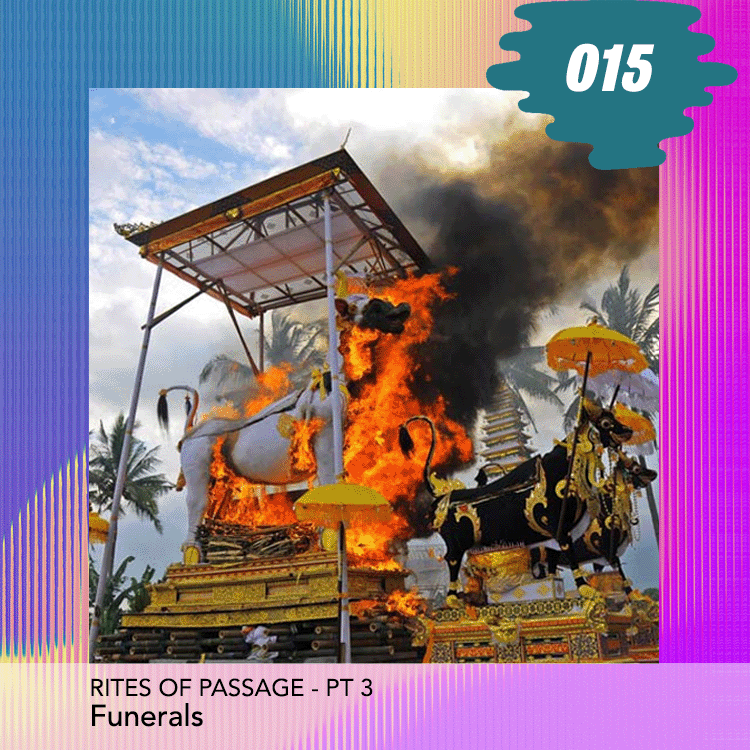
Rites and Passages Pt 3: Funeral Rites
Part 3: Funeral Rites, covers the last rite of passage a human will go through– death

Rites and Passages Pt 4: Contemporary Death
Part 4: Death Ritual: Continuity and Change goes even deeper into this most mysterious transition, raising pressing questions about how rites of passage around death are changing in response to societal and environmental conditions today.

Race and Ethnicity Part 1: Rethinking Race
Part 4: Death Ritual: Contemporary Death goes even deeper into this most mysterious transition, raising pressing questions about how rites of passage around death are changing in response to societal and environmental conditions today.

Race and Ethnicity Part 2: Contemporary Perspectives on Race and Ethnicity
If you watched our video on gender and sexuality, you know there are aspects of human experience that feel like sheer biology–but a deeper investigation reveals the influence of culture. Race has been framed as a physical fact, but it is actually a construct–arguably, as much a product of culture as ethnicity and ethnic identity. In Part Two: Contemporary Perspectives on Race and Ethnicity” we’ll look at experiences of celebration and oppression around race and ethnicity, delving into food, family, and more.

Forms of Violence Part 1: History of Warfare
If you watched our video on gender and sexuality, you know there are aspects of human experience that feel like sheer biology–but a deeper investigation reveals the influence of culture. Race has been framed as a physical fact, but it is actually a construct–arguably, as much a product of culture as ethnicity and ethnic identity. In Part Two: Contemporary Perspectives on Race and Ethnicity” we’ll look at experiences of celebration and oppression around race and ethnicity, delving into food, family, and more.

Forms of Violence Part 2: Culturally Specific Expressions of Violence
Why would an anthropologist study violence? On a small scale, violence can harm individuals and on a large scale, lead to societal breakdown and cultural ruin.
Isn’t that fundamentally antisocial? Well, it turns out that violence is highly social, and anthropology has a lot to say about it–from its origins, to its expression, to its relationship to society. And, what we’ve come to understand about violence may help promote peace. In other words, violence may be an inescapable part of human culture–and more closely linked to the better parts of our nature than you may have imagined.

Globalization Part 1: Processes of Globalization
How do we understand or even claim agency in something as seemingly huge as globalization? This video will provide some terms and concepts useful for understanding globalization’s local impacts. Then, host anthropologist Robert Lemelson will reflect on the role anthropology has had to play in perpetuating the harms and dangers that have been part of globalization, but also how anthropologists can help voice stories of resilience, and facilitate new solutions.